
Abu Dhabi: A simple stroll at Abu Dhabi’s family park, the excitement to check out the robotic dog at the park, the group of three coaches- Mohammed Noushad, Fasal Rahman and Yadhu Krishna, at the Winner Karate Club stepped on the idea of an initiative in June 2026.
“While we were here, we saw people workout independently. One man stood out to us, we call him ‘Latifka’- brother Latif’. He was throwing punches in the air and his workout was impressive,” said Yadhu Krishnan, 24-year-old karate coach working at the Club.
Today, it is a community of people, built over consistency, six workouts a week, more than 100 regular participants and a WhatsApp community exceeding 2,000 members.
The coaches had not gone to the park looking for followers. “One day we came to the family park to see the robotic dog,” recalled Yadhu Krishnan, one of the three coaches from Winner Karate Club. “While we were here, we saw people work out independently.”
From three to 164
Brother Latif’s shadow punches began a story, that three coaches never intended. They wanted to approach him but hesitated. “We were shy to strike up a conversation,” Krishna said. Brother Latif noticed. “Understanding our hesitation, he took the step to speak to us, and that’s when we proposed the idea of working out together.”
Amid their conversation one observation stayed, many were working out, but most were doing it alone. “We noticed the lack of motivation in people working out around us,” Krishna said.
Their own beachside routine had been repeatedly interrupted by work and other commitments. A larger group, they reasoned, would make everyone, including themselves more accountable.
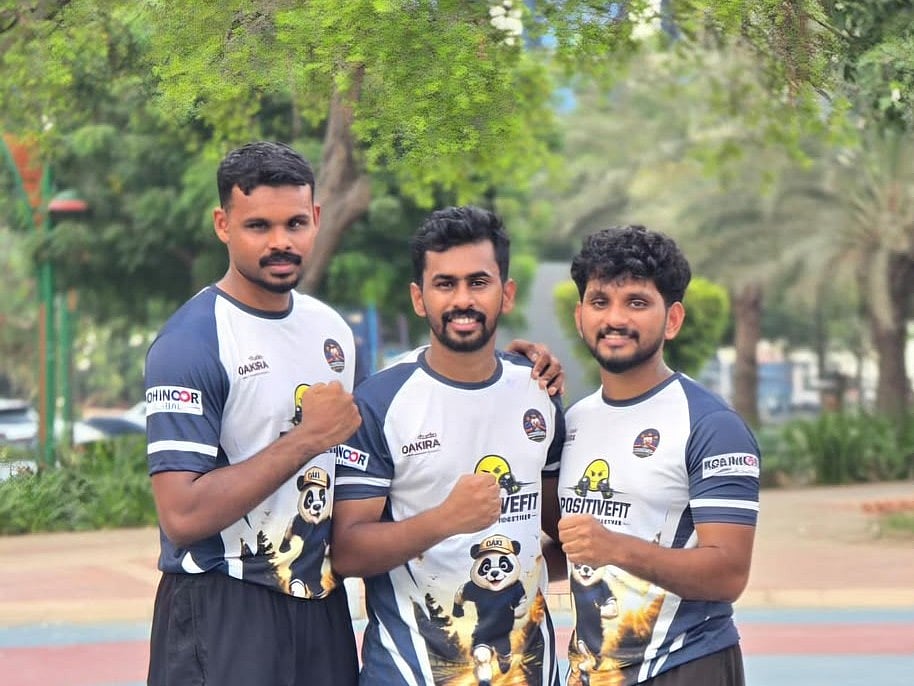
That day they filmed a video, posted it on Instagram and included a WhatsApp link sharing their plans to work at the park. “Within a single day of posting the video, around 250 people expressed interest and joined the group,” said coach Mohammed Naushad.
The response online was immediate; the turnout in the park took a little longer. Two people arrived on day1 then the next day, followed by two more the day after. “We started with three. Day by day, it increased,” Krishna said. “By day three, we had around 40.”
Attendance eventually reached 164, and about 100 to 120 people now regularly turn up for the hour-long sessions. They called it Positive Fit. “We didn’t expect anything,” Krishnan said. “We just started with the intention that those who need it will find us.”
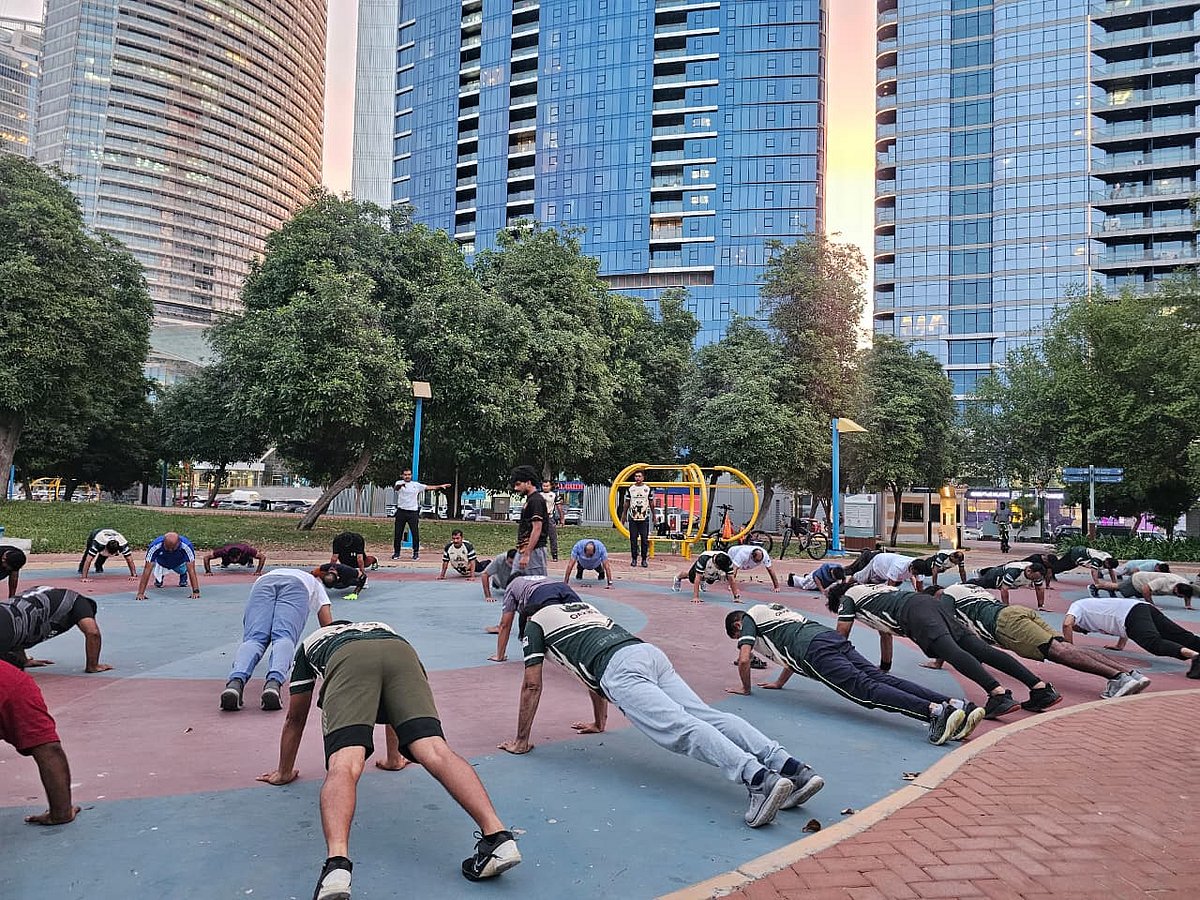
Most of those who found the group had already tried to build a fitness habit elsewhere. “Many participants told us they had previously paid for gym memberships but struggled to stay consistent because they were exercising alone,” Naushad said.
“Working out in a group provides motivation, accountability and a support system.” In the park, newcomers are guided through movements, exercises are adapted for those with leg pain or other physical limitations, and diet suggestions are offered only to people who ask for them.
After about six weeks, members began telling the coaches that they could see changes and felt more active throughout the day. Some reported weight loss; others said their blood sugar, cholesterol or blood pressure readings had improved.
Krishna drew a careful line around those accounts. “It’s not about curing the disease fully, but being able to maintain a balance,” he said. One participant who began at 114kg has since lost considerable weight. “That is our motivation to go further,” he added.
Nisham Marakkar, relationship officer in the travel industry at 42, shared his weight-loss journey so far. “I’m mildly Asthmatic, and I had high BP, concerns of uric acid; now everything is normal, my doctor was also surprised when he saw my changes.”
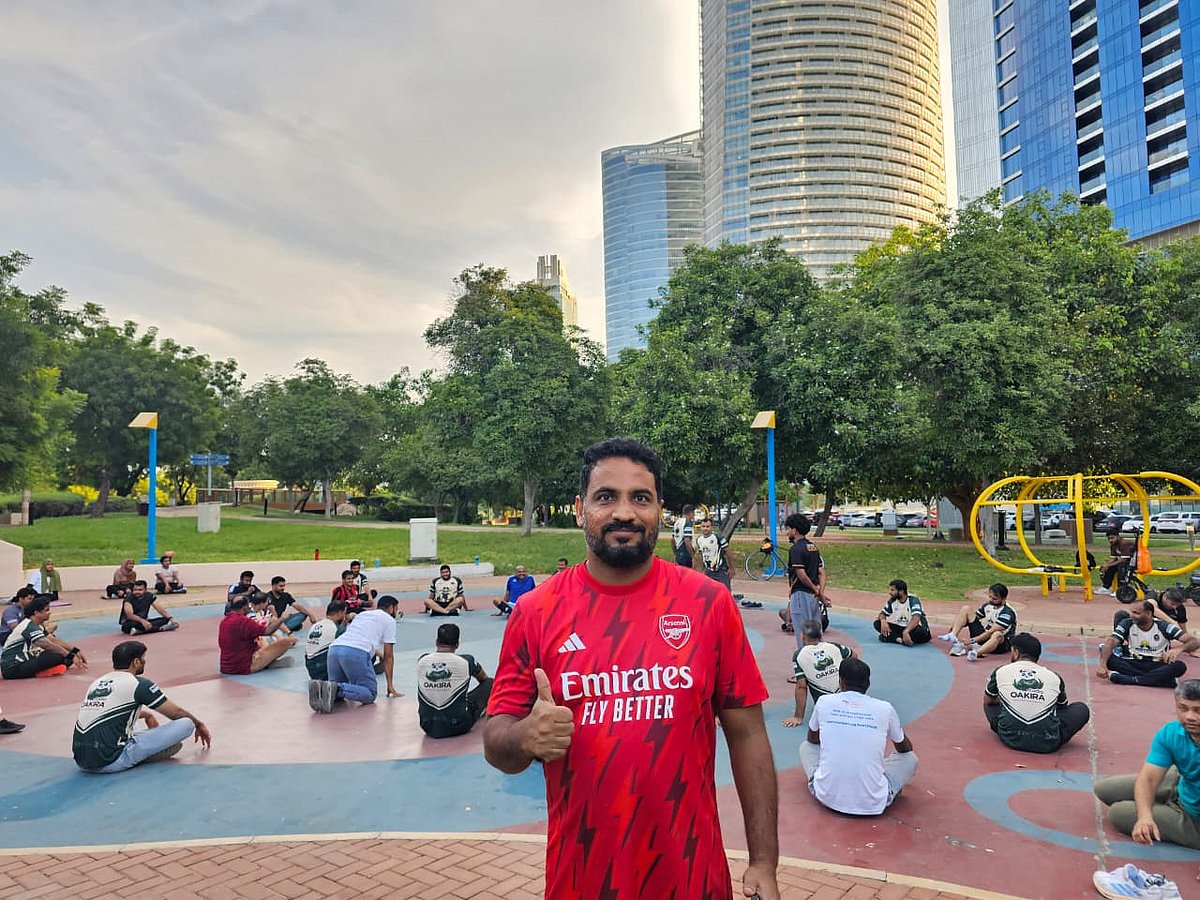
He said that even in their profession, people say that their physique is the reason why they can’t achieve their targets. So, he set out to lose weight and has been consistent since.
The change the coaches describe most vividly, however, is not measured on a scale. Naushad added that these sessions offer more than just physical exercise.
“Many participants, especially those working in corporate jobs, tell us that the workouts help relieve stress and improve their overall energy levels throughout the day.” He said, “This is consistent feedback we receive from members.”
Living in a different country is very different from living in our home country. Krishna said about the routines of those living away, “Once you are done with work, you go back to your room and then you are doomscrolling through social media.” The daily hour in the park interrupts that lonely rhythm.
“Mentally, people feel more relaxed. We can see the happiness and the helping hand they extend to each other,” said Krishna.
Over time, strangers became friends and the workout group became what the coaches call a family. “They stayed like a huge family, with a good bond,” Krishnan said. Its youngest member is Falah,11-year-old; and its oldest participant is 70-year-old.
“I came with my mother, because she wanted to do it. I came to protect her,” said Mohammad Falah, the 5th grader, who accommodates these sessions before his morning run for school.
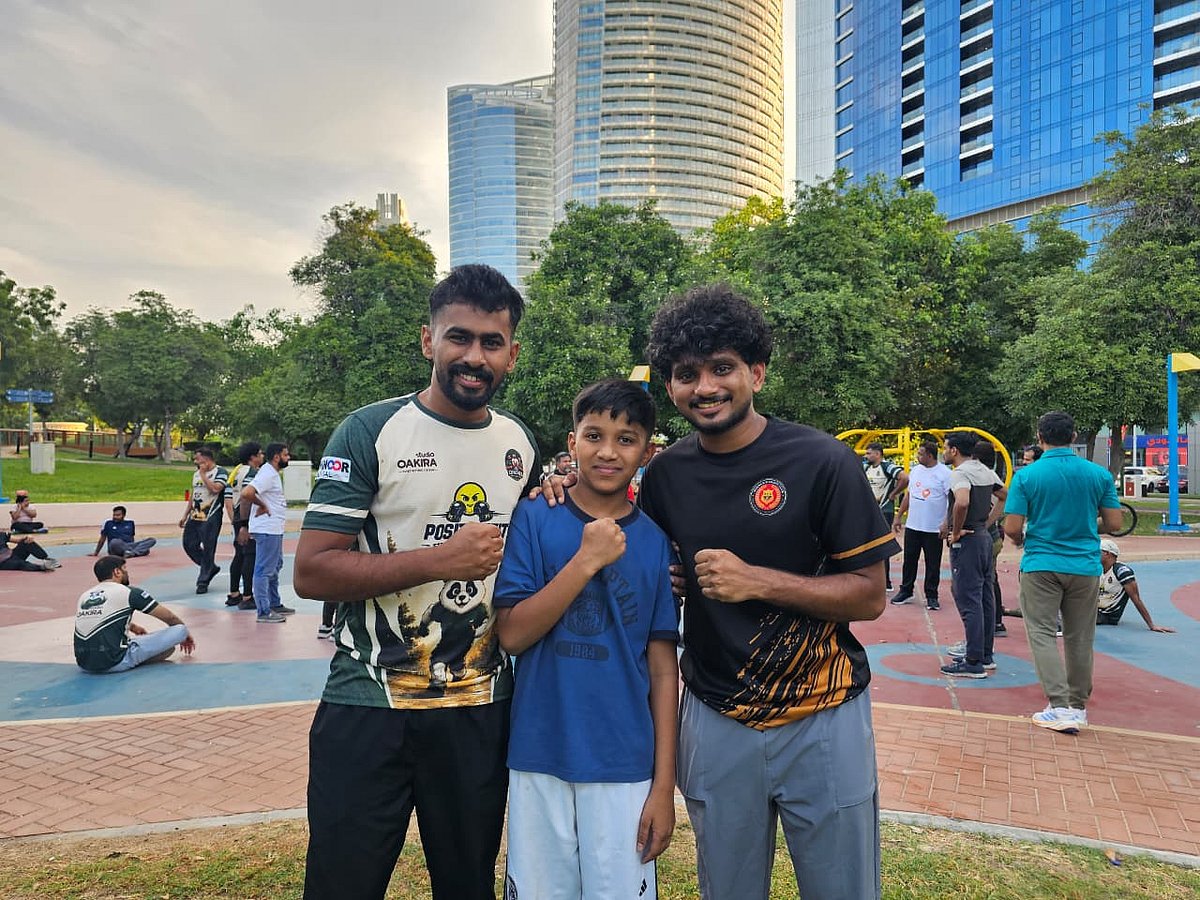
“We saw someone with 125 kgs, reduced to 105 kgs,” he said, adding they make them do the warmups for Karate, “so it has all kinds of exercise.” He is now motivated to continue his wellbeing journey with them.
Participants come from different professions starting from a baqala staff to high profile executives, irrespective of nationalities. Some travel from Mussafah and can manage only weekends.
Women, who joined later, now have a dedicated WhatsApp group where concerns can be raised more comfortably, alongside three general groups.
Aleyamma, a working nurse living in tourist club, walks for half-an-hour every morning to reach them. “I usually lie on bed lazy. Since my day one in June, the motivation to come the next day has been consistent. I started to wake up early, coming here gives a feel of a community, giving me a sense of relaxation.”
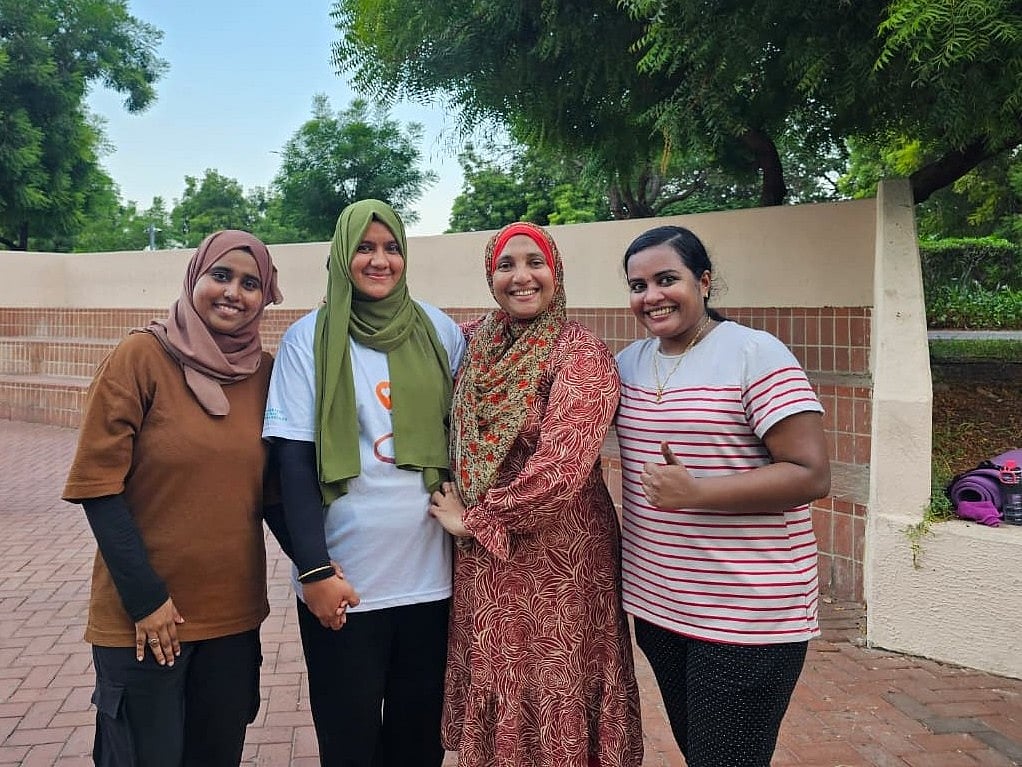
Jisa Shafeek, a homemaker, started coming with her husband. Her mornings, she admits, used to be slow and lazy. Now the roles have reversed: she is the one nudging him out of bed and into the park.
Keeping it going
Behind the camaraderie is a daily exercise in logistics. “We obtain municipality permission for our activities on a daily basis,” Naushad said. The organisers carry basic emergency and hydration supplies and receive security support because of the prior permissions they obtain.
“Emergencies are rare, although some first-time participants may occasionally feel unwell as they adapt to the workouts,” Naushad added.
They also credit Abu Dhabi’s accommodating environment and the flexibility of its permission process with making it possible to keep the free sessions running alongside their work schedules.
The coaches conduct polls the evening before, “We share polls in advance to estimate attendance and prepare accordingly,” Naushad said. With three coaches, he added, the team can comfortably manage up to 180 participants.
The community has begun to carry ideas into the park with it. Members have connected the group with free initiatives and health campaigns, including Aster’s Heart2Heart programme, according to Naushad.
“Some of the members even bring in contributions and free initiatives, including Burjeel LLH, Heart2Heart campaign, where every 10,000 steps will lead to free heart surgery for a needy child, and many other sponsorships,” Naushad said.
For Sakeena Mujeeb, a home maker, the initiative has given her “the wings of a butterfly”. She said the energy here with a lot of friendships, gives her a different level of strength.
The three men fit all of this around their regular jobs, planning, coaching and answering messages in the spaces left by their own working days.
Many other initiatives have since begun similar sessions around the city, a development the coaches welcome rather than view as competition. “We may not reach everywhere to address the needs in the space, Krishna said. “So, to see more people engaging in a similar trend is nice.”
Their ambition is as direct as the first invitation they made to brother Latif in the park. “Our vision is to make an impact in people’s lives through fitness,” Krishnan said. The movement began almost accidentally, but their consistency is intentional.